Beadwork to Backstage: The Native Designers Rewriting the Rules of American Fashion
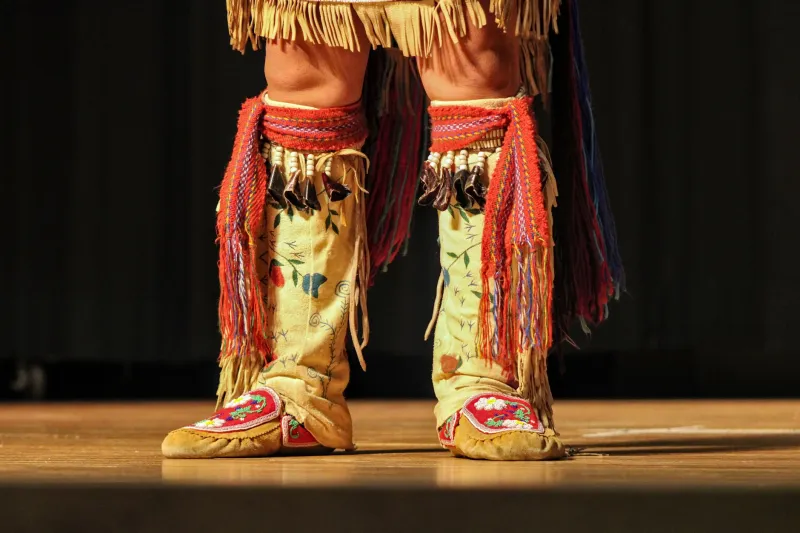
There's a moment at a fashion show — right before the first model hits the runway — where the whole room holds its breath. For a handful of Indigenous designers who've recently carved out space in America's most competitive style arenas, that moment carries a weight most of their peers can't fully imagine. It's not just nerves. It's history.
Because for these creators, every stitch is a conversation between the present and the past. Every piece that walks a runway in New York or lands on the rack of a curated boutique is also a quiet act of reclamation.
More Than a Mood Board
Let's be honest: mainstream fashion has a long and ugly history with Native American culture. Headdresses as Halloween costumes. "Aztec prints" slapped on fast-fashion leggings. The word "tribal" used to describe anything with geometric shapes. For decades, the industry took the aesthetic and ditched the accountability.
What's different now isn't just that Indigenous designers are getting more visibility — it's that they're getting it on their own terms. Designers like Bethany Yellowtail (Northern Cheyenne and Crow), who built her label B.Yellowtail into a nationally recognized platform, have been explicit about the fact that their work isn't available for reinterpretation. The designs mean something specific. They come from somewhere real.
Yellowtail's collections regularly incorporate traditional Crow and Northern Cheyenne patterns, but she's equally deliberate about the business side — partnering directly with Native artisans, ensuring that revenue flows back to communities, and refusing to license her aesthetic to brands that don't share those values. That kind of structural intentionality is what separates cultural celebration from cultural extraction.
Origin Stories That Actually Matter
For many of these designers, the path to fashion wasn't a straight line from art school to atelier. It wound through reservation towns, grandmothers' sewing rooms, and ceremonies that taught them what fabric could hold.
Taku Farrant, a Lakota Sioux designer who's been generating serious buzz in independent fashion circles, grew up watching her aunties bead moccasins for community events. She didn't see it as art at the time — it was just life. It wasn't until she moved to Chicago for school and felt the absence of that visual language that she understood what it meant to her. Her debut collection, which drew on ledger art traditions and incorporated hand-sewn quillwork into contemporary silhouettes, sold out within days of its online launch.
"People kept calling it 'inspired by Native culture,'" she said in a recent interview. "I had to keep correcting them. This is Native culture. I'm not inspired by it — I'm in it."
That distinction matters enormously, and it's one that Indigenous designers navigate constantly. The fashion world loves a good origin story, but it tends to flatten complexity. These designers are pushing back against that tendency by being loudly, specifically themselves — not "pan-Native," not generically "tribal," but Lakota, Diné, Muscogee, Tlingit.
The Commerce Question
Selling your culture is a phrase that gets thrown around a lot, and it's worth sitting with the tension it creates. Because economic survival is real. Community investment is real. The ability to pay artisans fair wages for traditional craft is real.
Designers operating in this space have developed thoughtful frameworks for how to grow without losing the plot. Many work exclusively with Native-owned suppliers. Some donate a percentage of proceeds to language preservation programs or land defense funds. Others limit production intentionally, refusing to scale in ways that would require outsourcing or diluting the work.
Oriole Swiftwind, a Muscogee Creek designer based in Tulsa who recently showed a capsule collection at a New York pop-up event, describes her pricing structure as a form of education. "When someone sees the price tag and balks, I explain what they're actually buying," she says. "They're buying hours of handwork. They're buying a living tradition. They're buying a relationship with a community that made this possible. That's not overpriced. That's properly valued."
Her pieces — structured jackets with hand-painted ribbon work panels, dresses with clan symbols woven into the hem — have attracted attention from stylists working with musicians and actors who want to make a statement on the red carpet without resorting to the usual luxury labels.
When Ceremony Meets Couture
One of the more nuanced conversations happening within Indigenous fashion circles is about what can and cannot be shared publicly. Not everything is for everyone, and the designers navigating mainstream visibility are often the first to say so.
Certain patterns, colors, and motifs carry ceremonial significance that places them outside the scope of commerce entirely. Responsible Indigenous designers draw those lines clearly — and they don't apologize for it. A Diné weaver might create stunning contemporary textiles for sale while keeping specific sacred patterns entirely out of her commercial work. A Tlingit artist might incorporate clan crests into pieces made exclusively for community members, never for the open market.
This isn't a limitation. It's a form of integrity that the broader fashion world would do well to learn from. In an industry obsessed with novelty and access, the idea that some things are simply not available — not for the right price, not for the right buyer — is quietly radical.
A Living Archive
What strikes you, when you spend time with the work these designers are producing, is how densely layered it is. A single garment might reference a specific treaty negotiation, a grandmother's beading style, a ceremony that's been practiced for centuries, and a contemporary political stance — all at once. Fashion, in this context, isn't superficial. It's documentary.
That's a powerful reframe for an industry that often prioritizes the new over the meaningful. Indigenous fashion designers aren't just making clothes. They're making records. They're saying: we were here, we are here, and here is what that looks like.
For communities whose histories have been systematically suppressed — whose languages were punished, whose ceremonies were outlawed, whose land was taken — that act of visible, wearable presence carries a significance that goes far beyond fashion week.
What Support Actually Looks Like
If you're reading this and feeling inspired to engage, the ask from most Indigenous designers is pretty consistent: buy directly. Skip the middlemen who aggregate Native aesthetics without attribution. Follow and amplify the actual creators, not the brands that "take inspiration" from them. And if you're in the industry — as a stylist, a buyer, a journalist — do the work of learning who made something and what it means before you put it in a spread or on a rack.
The designers making waves right now aren't asking for a seat at a table that was built without them. They're building their own tables, in their own communities, on their own terms. The runway is just where the rest of us finally get to see it.