Before You Step Into the Arena: A First-Timer's Field Guide to Powwow Respect in 2026
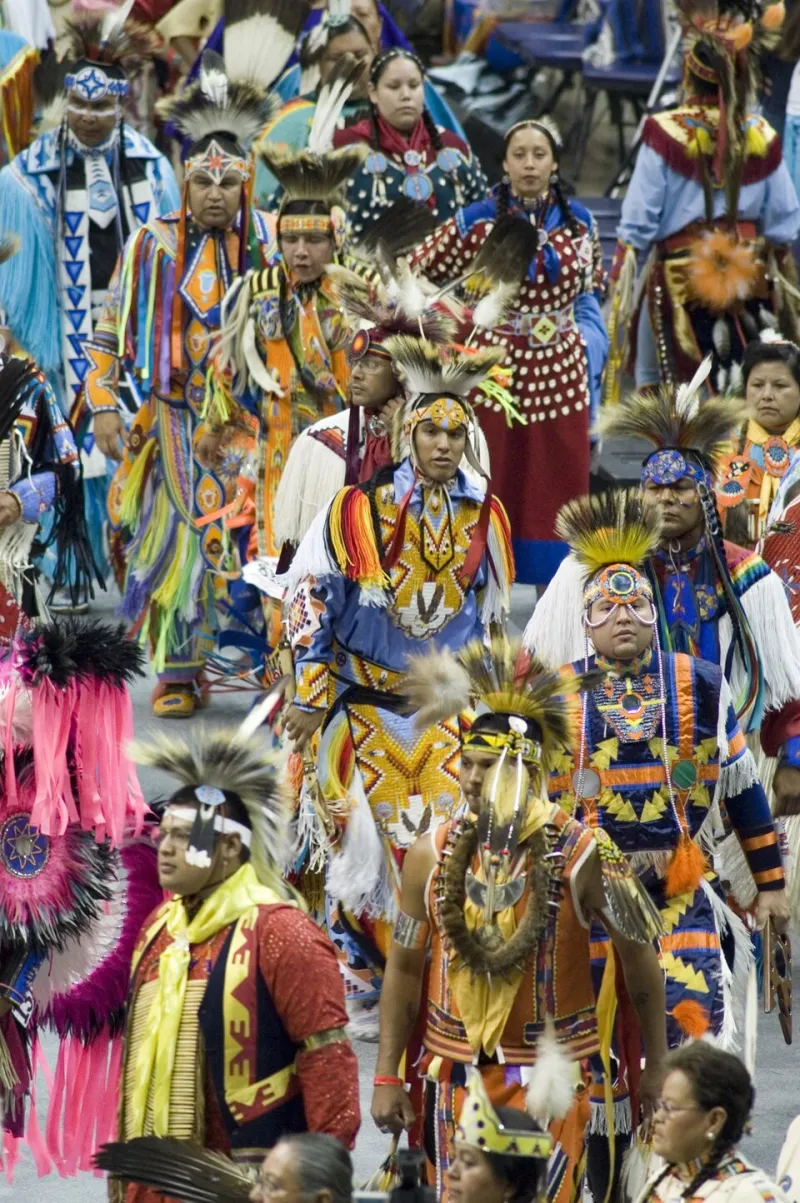
Photo: Smithsonian Institute: R.A. Whiteside, Public domain, via Wikimedia Commons
So you are going to your first powwow. Maybe you are non-Native and curious. Maybe you are urban Native and feel a little late to your own culture. Maybe you got invited by a friend and you are already worried about doing the wrong thing. Good news: the wrong thing is usually obvious, and the right thing is usually just paying attention.
A powwow is not a festival. It is not a Renaissance fair with better frybread. It is a community gathering with spiritual, social, political, and economic layers. That does not mean you need to whisper the whole time or wear a sign that says I am sorry for colonialism. It means you should arrive with the same basic respect you would bring to somebody else's family reunion, church picnic, and small-business market all at once.
First, the word
People say powwow, pow wow, and pau wau. The spelling varies. The meaning does not. It comes from a Narragansett word often translated as spiritual leader or healing gathering, and it has traveled across tribal nations and decades. In 2026, powwows range from massive competition events with serious prize money to tiny community gatherings where the biggest drama is whether the frybread line is moving. Do not call it a show. Do not call it a performance. It is a gathering, and you are a guest.
Regalia is not a costume
This is the big one. Regalia is not a Halloween outfit. It is earned, inherited, made, gifted, and cared for. A dancer's outfit can carry family history, tribal identity, ceremony, and years of work. Some pieces are sacred. Some are not. You do not need to know which is which before you arrive. You just need to keep your hands to yourself unless you are invited to touch.
So do not ask to try it on. Do not pet the feathers. Do not ask how much it cost like you are pricing a used car. If you want to compliment someone, say the regalia looks strong, or ask a general question about the dance style if the person seems open to chatting. If they are busy, let them be busy. They are not there to be your cultural docent.
The camera question
Take fewer photos than you think you should. Ask before you take any. If there is a sign that says no photography, believe it. If the MC asks people to put phones away during an honor song or a special, do it immediately. A phone held high can block a dancer's path, a family's view, or a moment that was not meant for your camera roll.
When you do ask, be specific. Can I take a photo of your regalia after this dance? is better than a vague wave of your phone. And if someone says no, say thanks and move on. No lecture. No wounded look. No I was just asking. Just move on.
The arena has rules
Listen to the MC and the arena director. They are not background noise. They are running the room. During Grand Entry, stand. Remove your hat. Do not walk across the dance arena. Do not let your kids run through it like it is a splash pad. If you are not sure where to sit, follow the crowd and leave the chairs closest to the arena for elders, dancers, and families who need them.
Some dances are open to everyone. Intertribal dances are often a chance for visitors to join in if they feel called. But watching is participating too. You do not have to dance to belong in the room. If you do join, keep it simple, follow the person next to you, and do not treat it like a TikTok challenge. And please, no alcohol or drugs. That is not a suggestion.
Vendors are the economy
Bring cash. Small bills. Many vendors may take cards in 2026, but do not bet your lunch on it. Buy something. Buy from more than one table if you can. Frybread, jewelry, beadwork, ribbons, shirts, art, and food are not souvenirs. They are how families pay for gas, materials, and the next gathering.
Do not haggle over beadwork. Do not ask a vendor to explain their whole family history while a line forms behind you. Do ask questions if the artist seems open. Ask about materials, care, or the story behind a piece if they are willing to share. And if you buy food, know that frybread is not a museum exhibit. It is lunch, and it is better hot.
Watching versus participating
There is a difference between being present and making yourself the main character. Do not narrate the powwow to your social media followers while a dance is happening. Do not stand in the middle of the aisle to get the perfect shot. Do not ask who is the chief, because that is not how it works. Do not ask if you can join a dance that is closed. Just because you saw someone else do something does not mean it is open to you.
If you are Native and feel out of practice, you are not alone. Urban Native folks show up to powwows all the time feeling like they missed a memo. Ask an elder or a friendly dancer where to sit. Say you are learning. Most people will meet you with more grace than you expect. The point is not to prove you are Native enough. The point is to show up with respect.
Practical notes for 2026
Check the tribal website or event page before you go. Bring a folding chair, a water bottle, layers, sunscreen, and cash. Leave pets at home unless you know they are welcome. Do not wear a fake headdress, a Halloween buckskin, or a T-shirt that turns Native people into a punchline. If you are unsure about an outfit, choose boring. Boring is safe.
And when you leave, take the lesson with you. A powwow is not a box to check off your cultural bucket list. It is a living community space. The best way to honor it is to act like a guest who wants to be invited back, not a tourist who wants a story. Go to learn. Go to support. Go to listen. The rest will follow.