Speaking the World Back Into Existence: Indigenous Language Keepers Are Building Digital Tools That Refuse to Let Words Die
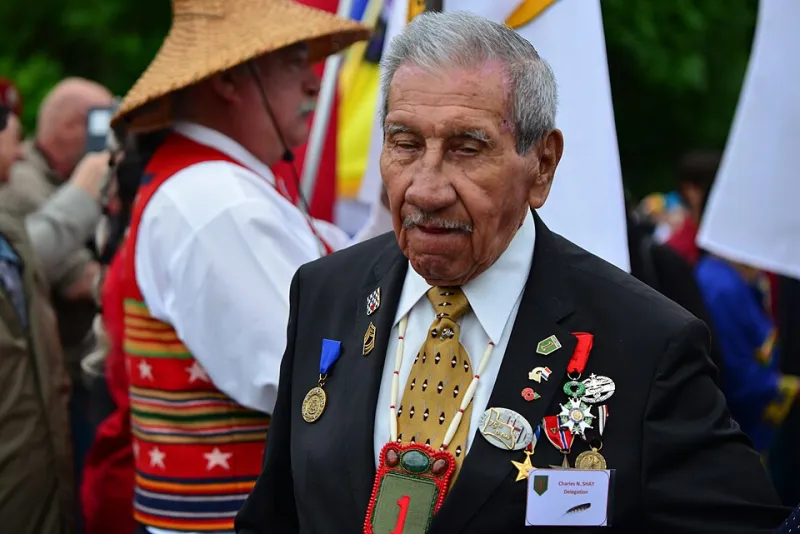
Photo: U.S. Army photo by Yvonne Najera, Public domain, via Wikimedia Commons
There's a word in Lakota — wóčhekiye — that doesn't translate cleanly into English. It carries the weight of prayer, of relationship, of speaking across time. When a language disappears, words like that one don't just vanish from dictionaries. They take whole cosmologies with them.
That's the stakes language keepers across Indian Country understand better than anyone. And increasingly, they're refusing to let those stakes stay where they've been for generations — stacked against them.
From the Pacific Northwest to the Gulf Coast, a new wave of Indigenous linguists, educators, elders, and tech-savvy young people are doing something remarkable: they're building digital tools that make their languages not just survivable, but genuinely alive. Interactive dictionaries. TikTok vocabulary lessons. Community-run apps. Language nests embedded in after-school programs. It's not your grandmother's preservation project — though your grandmother might be the one running it.
The Weight of What Was Taken
To understand what's being rebuilt, you have to understand what was dismantled. For most of the 19th and 20th centuries, U.S. federal policy treated Indigenous languages as obstacles to assimilation. Boarding schools punished children for speaking their mother tongues. Entire generations grew up severed from the words their ancestors used to name the stars, the seasons, and each other.
The results were devastating. Of the roughly 300 Indigenous languages once spoken across what is now the United States, fewer than 150 are still spoken today — and many of those have only a handful of fluent speakers, most of them elderly. Linguists have long described this as a crisis. But communities living it have always called it something more personal than that.
"Language is how we know we exist," says one language keeper working with a tribal education department in the Northern Plains. "When you can't speak your language, there's a silence inside you that nothing else fills."
Building the Dictionary No One Else Would Make
That silence is exactly what digital language projects are pushing back against. One of the most compelling models emerging right now is the community-controlled digital dictionary — a living, searchable database built not by outside academics but by tribal members themselves.
Unlike static academic archives, these platforms are designed to grow. New words are added. Pronunciations are recorded by multiple speakers to capture regional variation. Younger contributors upload example sentences. Elders record stories that demonstrate how words live in context rather than isolation.
Some tribes have partnered with platforms like FirstVoices, a Canadian-developed tool that has been adapted by dozens of Native American communities in the U.S. Others have built custom solutions from the ground up, working with Native software developers — including some of the founders profiled in our earlier coverage of Indigenous tech entrepreneurship — to create tools that reflect their specific linguistic and cultural needs.
What makes these projects different from the dusty archives of the past is accessibility. They're built for phones. They work offline in areas with poor connectivity. They're designed so that a ten-year-old in a rural community can pull up a word, hear it spoken, and practice it without needing a classroom or a textbook.
Social Media as Language Nest
If digital dictionaries are the infrastructure, social media is the spark. Across Instagram, TikTok, and YouTube, Indigenous language educators are building audiences that no tribal language program could have dreamed of a decade ago.
Creators posting short vocabulary clips, pronunciation challenges, and "word of the day" content are reaching not just their own communities but Indigenous diaspora members scattered across cities who grew up disconnected from their heritage languages. For many of these viewers, a 60-second TikTok is the first time they've ever heard their ancestral language spoken.
"We had a video go semi-viral last year," says one Cherokee language educator based in Oklahoma. "People were commenting from California, New York, Germany — Cherokee descendants who had no idea the language was still being spoken. That's not a small thing."
The reach is real, but so are the complications. Language is sacred. Not everything should be public. Many communities are having ongoing, nuanced conversations about what goes online, what stays within the community, and how to protect ceremonial language from being stripped of its context by the internet's flattening effect. These are hard conversations — and they're being led by the communities themselves, which is exactly how it should be.
Teaching the Teachers
One of the most urgent challenges facing language revitalization isn't technology — it's people. With fluent speakers aging out, communities are racing to train a new generation of teachers before the living chain of transmission breaks.
Master-apprentice programs, where a fluent elder works one-on-one with a younger learner for intensive daily immersion, have shown real results. Language camps — some lasting weeks, some running year-round — are creating cohorts of young semi-speakers who can hold a conversation and pass words to their own children.
The digital tools amplify this work. Recorded lessons from elders who have since passed become teaching resources. Archived stories become curriculum. A grandfather's voice, captured on a phone a decade ago, teaches his grandchildren words he never got to say to them in person.
That's not just preservation. That's resurrection.
What Reclaiming a Language Actually Does
Research consistently shows that Indigenous language revitalization correlates with stronger mental health outcomes, higher academic achievement, and deeper community cohesion. But ask language keepers why they do this work, and the answers go somewhere statistics can't reach.
"When I speak my language, I'm not translating my world into someone else's framework," says one Anishinaabe language teacher in Minnesota. "I'm seeing it through my own eyes for the first time."
That's sovereignty. Not the legal kind, though that matters too. The kind that lives in your mouth. The kind that no federal policy ever fully succeeded in taking — and that no algorithm, no matter how well-designed, can replace. But the right tools, built by the right people, for the right reasons? They can carry the flame a little further down the road.
And right now, across Indian Country, that flame is burning brighter than it has in generations.