Lights, Camera, Sovereignty: The Native Filmmakers Taking the Screen Back
There's a particular kind of exhaustion that comes from watching yourself be invented by someone else. For Native Americans, that exhaustion has a century-long Hollywood résumé — stoic warriors on horseback, tragic figures frozen in a sepia-toned past, comic relief in someone else's Western. The screen was never really a mirror. It was a funhouse version, built by outsiders and sold back as truth.
But something has shifted. And it hasn't happened quietly.
A Movement That Didn't Wait for Permission
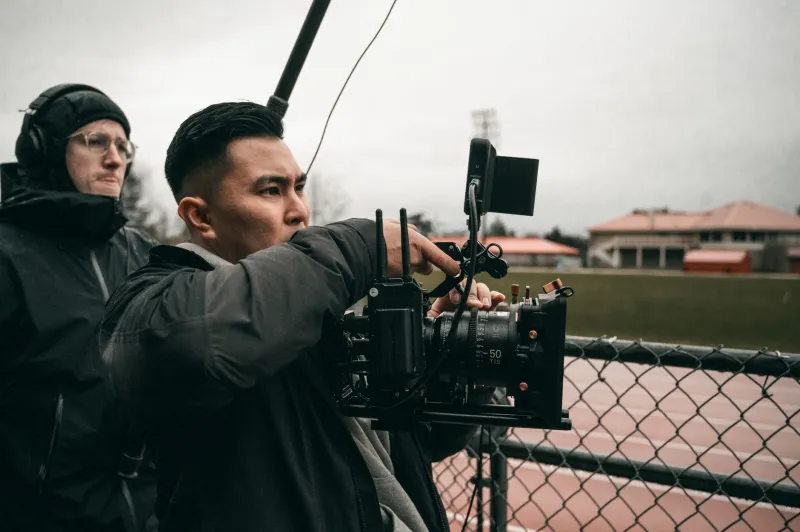
Across the country — from the Navajo Nation to urban production studios in Los Angeles and Minneapolis — Indigenous filmmakers are building something that the industry didn't hand them. They're building it themselves, on their own terms, with their own cameras and, increasingly, their own funding.
The numbers are still catching up to the momentum. Native Americans remain among the most underrepresented groups behind the camera in Hollywood. But the cultural infrastructure that's been quietly assembling over the last decade is starting to show real results. Film collectives, tribal-backed production companies, and Native-specific mentorship pipelines have created a scaffolding that didn't exist twenty years ago — and the work coming out of that scaffolding is landing at Sundance, SXSW, and Tribeca.
Filmmakers like Sydney Freeland, a Diné director whose work spans Netflix originals and independent features, and Sterlin Harjo, the Creek/Seminole co-creator of the breakout Reservation Dogs, have become touchstones for a generation that grew up watching their communities get it wrong on screen and decided to fix it. Reservation Dogs, in particular, became a cultural flashpoint — not because it was tragic or ceremonial or educational, but because it was funny, weird, specific, and deeply human. It treated Native teenagers like teenagers. Revolutionary, apparently.
The Logistics Are Real, and They're Hard
Let's not romanticize the grind. Making films is expensive and politically complicated under the best circumstances. Making them as an Indigenous creator navigating an industry that still defaults to non-Native gatekeepers adds layers that most film school curricula don't cover.
Funding is the obvious hurdle. Traditional studio financing comes with strings — creative control, casting approvals, story notes from executives who may have never set foot on a reservation or thought critically about representation. Many Native filmmakers are turning instead to tribal grants, Indigenous-focused foundations, and crowdfunding to retain ownership of their narratives. The Sundance Institute's Native American and Indigenous Program has become a critical on-ramp, offering labs, fellowships, and direct mentorship that help emerging filmmakers develop projects without surrendering the story in the process.
Then there's the question of casting and crew. Authentic representation doesn't stop at the director's chair. Several Native-led productions have made a deliberate commitment to hiring Indigenous crew members, consulting with tribal communities during production, and casting Native actors in Native roles — a standard that sounds obvious but remains surprisingly rare across the broader industry.
Filming on tribal land introduces its own set of considerations: permits, community consent, cultural protocols around what can and cannot be depicted on camera. These aren't obstacles so much as a different framework for filmmaking — one rooted in accountability to community rather than just to a studio release schedule.
Telling the Story That's Actually There
What separates this new wave from the Hollywood tradition it's pushing back against isn't just who's holding the camera. It's what they're choosing to look at.
Indigenous filmmakers are exploring the full, complicated spectrum of contemporary Native life — addiction and recovery, land rights battles, intergenerational trauma, but also joy, romance, humor, and the ordinary texture of daily existence. They're making horror films that draw on specific tribal cosmologies. They're making road trip comedies. They're making documentaries that center Indigenous scientists, athletes, and entrepreneurs.
The short film space has been particularly fertile. Reservations-based productions with shoestring budgets are producing work that travels internationally on the festival circuit, often telling stories that could only come from inside a specific community. There's an intimacy and authority in that kind of filmmaking that no outside production can replicate.
Language is another front. Several recent Indigenous films have been shot partially or entirely in Native languages — a choice that is simultaneously an artistic decision and a political one. When a film is spoken in Lakota or Mvskoke, it asserts that those languages are living, present, and worthy of a cinematic stage. It also creates a viewing experience for Native audiences that many have never had before: seeing themselves, in their language, on a screen.
The Networks Making It Possible
Behind every filmmaker is a network. For Indigenous creators, those networks have had to be built with intention.
Organizations like the First Nations Film and Video Festival in Chicago, the imagineNATIVE Film + Media Arts Festival in Toronto (which draws significant US participation), and the American Indian Film Institute in San Francisco have created dedicated exhibition spaces where Native work reaches audiences who are hungry for it. These aren't niche events — they're launching pads.
Mentorship pipelines matter enormously. Established filmmakers like Harjo and Freeland have been vocal about paying their access forward, advocating for emerging talent and creating space on their own productions for people who are just starting out. The film industry runs on relationships, and for a long time, Indigenous creators were locked out of those rooms. Building parallel rooms — ones where the relationships are rooted in shared cultural stakes — is changing the math.
Social media has also democratized visibility in ways that benefit independent Indigenous filmmakers. A short film that might once have screened for a hundred people at a regional festival can now accumulate millions of views and spark genuine cultural conversations. That reach doesn't replace theatrical distribution, but it creates leverage.
What the Screen Owes
There's a larger conversation underneath all of this about what representation actually does — not just for audiences, but for communities. When young people on a reservation see a film where the characters look like them, speak like them, live in places that resemble theirs, something shifts in what feels possible. The screen becomes a mirror instead of a distortion.
That's not a small thing. It's not just entertainment. It's a reclamation of narrative, and narrative is one of the most powerful tools any culture has for sustaining itself across generations.
The Indigenous filmmakers working today aren't just making movies. They're building an archive. They're creating the record that says: we were here, we were complex, we were alive, and we told our own story.
Hollywood is a long way from catching up. But the cameras are rolling, the stories are being told, and nobody's waiting for an invitation.