Written in the Sky: How Native Astronomers Are Teaching Their Communities to Read the Stars Again
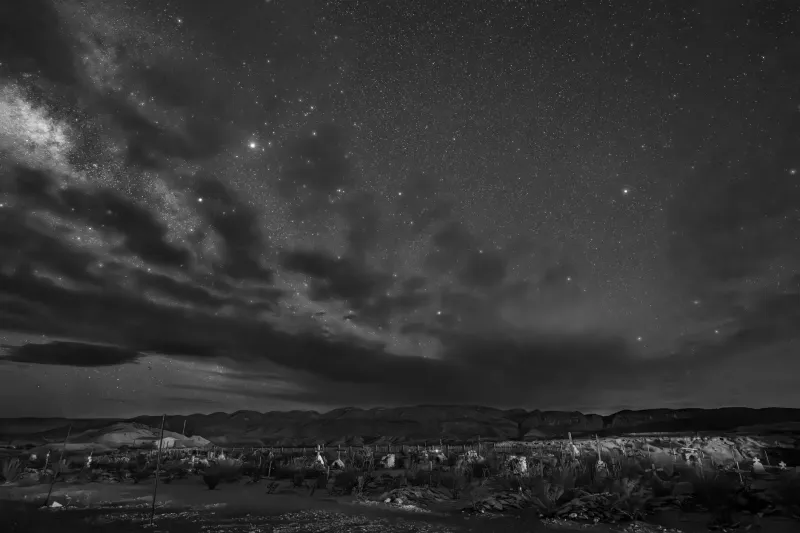
Step outside on a clear night far enough from city lights, and the sky opens up in a way that feels almost overwhelming. Thousands of stars, planets arcing slowly across the darkness, the Milky Way spilling like a river overhead. For most Americans, it's a beautiful mystery. For Indigenous communities across this continent, it was once a living library — a map, a calendar, a storybook, and a compass all rolled into one.
That library didn't disappear. It was pushed aside, dimmed by colonization, by forced relocation to places where the stars looked different, by boarding schools that replaced ancestral knowledge with European curricula. But it was never erased entirely. And right now, a remarkable network of Native astronomers, educators, and traditional knowledge keepers is doing the work of bringing it back into focus.
The Sky as a Living Document
Western astronomy tends to treat the night sky as a scientific puzzle to be solved — distances, compositions, gravitational mechanics. Indigenous astronomical traditions operated from a fundamentally different premise: the sky was in relationship with the earth, and understanding that relationship was a matter of community survival.
The Lakota, for instance, tracked the Pleiades — which they called the Seven Sisters — as a signal for when to move camp and when to prepare for winter. The Pawnee oriented their sacred lodges to align with specific star patterns. Cherokee oral traditions encode detailed knowledge of seasonal celestial shifts that corresponded to planting and harvest cycles. The Chumash of coastal California tracked solstices with a precision that still impresses modern researchers.
This wasn't folklore dressed up as science. It was science — sophisticated, tested over generations, and deeply integrated into every aspect of community life.
"The stars told us when to do things, not just what to look at," says one Diné educator who runs stargazing workshops on the Navajo Nation. "There's a whole calendar up there. Our ancestors read it every single night. We're just learning to read it again."
Where Science and Story Meet
One of the most exciting developments in this movement is the way it's refusing to choose between traditional knowledge and modern science education. Native astronomers aren't asking their communities to reject telescopes or physics. They're arguing — convincingly — that Indigenous sky knowledge and Western astronomy can sit side by side, each illuminating what the other misses.
At several tribal colleges across the Dakotas and the Southwest, astronomy curricula now include units on traditional star knowledge alongside conventional coursework. Students learn to calculate the position of celestial bodies with standard formulas, and they also learn the names their grandparents used for those same bodies and the stories attached to them. The two approaches don't compete. They deepen each other.
For young Native students who've grown up being told that science is something that happens in labs far away from their communities, this framing is genuinely transformative. Suddenly, their ancestors aren't the subject of history class — they're the predecessors of the scientists these students are becoming.
Getting Outside and Looking Up
The most immediate and joyful part of this revival is happening under open skies, often far from any classroom. Community stargazing events have become a growing feature of Indigenous cultural life in recent years — gatherings where elders share constellation stories while younger community members learn to locate those same stars with their own eyes.
Some of these events are formal, organized through tribal education departments or partnered with national park dark-sky programs. Others are beautifully informal — a family spreading blankets in a field, a grandmother pointing upward and beginning to speak in her language.
The dark-sky movement, which advocates for reducing light pollution to preserve natural nightscapes, has found an unexpected ally in Indigenous communities. Many tribal lands, particularly in the rural West, still offer some of the darkest skies in the continental United States. That's not incidental — it's a resource, and Native-led astronomy programs are increasingly treating it as one.
Several tribal nations have begun exploring formal dark-sky designations for their lands, which would not only protect the nightscape for stargazing but also recognize the cultural significance of those skies in a concrete, policy-level way. It's a small but meaningful example of sovereignty expressed upward, literally.
The Challenge of Reclamation
None of this is simple work. Generations of knowledge were interrupted, and not everything survived. Some constellation traditions exist only in fragmentary form, preserved in the memories of a handful of elders or in archival recordings made by anthropologists who often stripped the knowledge of its context and meaning.
Knowledge keepers working to revive these traditions have to navigate real tension — between sharing broadly and protecting what's sacred, between welcoming outside interest and guarding against appropriation, between urgency and care. Not every star story is meant for every audience. Some knowledge belongs to specific clans or ceremonies and isn't appropriate for public workshops.
The educators doing this work are thoughtful about those boundaries. They're building curricula that honor what can be shared while protecting what must be held closer. It's a delicate balance, and they're figuring it out in real time.
Why It Matters Beyond the Stars
At its core, this movement is about more than astronomy. It's about who gets to be recognized as a knowledge producer. For too long, the dominant narrative of science history has positioned Indigenous peoples as subjects of study rather than practitioners of sophisticated intellectual traditions. Reclaiming sky knowledge is part of a much larger project of reclaiming the right to be seen as thinkers, scientists, and teachers.
It also matters for the communities themselves in deeply practical ways. Language revitalization efforts often hinge on recovering the contexts in which language was used — and celestial knowledge is rich with specialized vocabulary, ceremonial language, and narrative structures that exist nowhere else. Teaching star traditions is, in many cases, teaching language.
And for young people growing up Native in America today, seeing their ancestors' knowledge treated with the same seriousness as any other scientific tradition is quietly radical. It says: your people were always paying attention. Your people always understood. The sky hasn't changed. Come look.
The Stars Are Still There
On any clear night, the same stars that guided generations of Indigenous peoples across this continent are still up there, doing exactly what they've always done. The Pleiades still rise at the same time each year. Orion still hunts across the winter sky. The Milky Way still arcs overhead in its slow, majestic sweep.
The knowledge to read all of it, to understand what it meant and what it still means, is coming back. Slowly, carefully, joyfully. One community workshop at a time, one elder's story at a time, one young person lying on their back in a dark field and finally learning the names for the lights above them.
That's not a small thing. That's a whole world being remembered.