More Than a Shelf: Why Native-Owned Bookstores Are Becoming the New Heartbeat of Indigenous Cultural Life
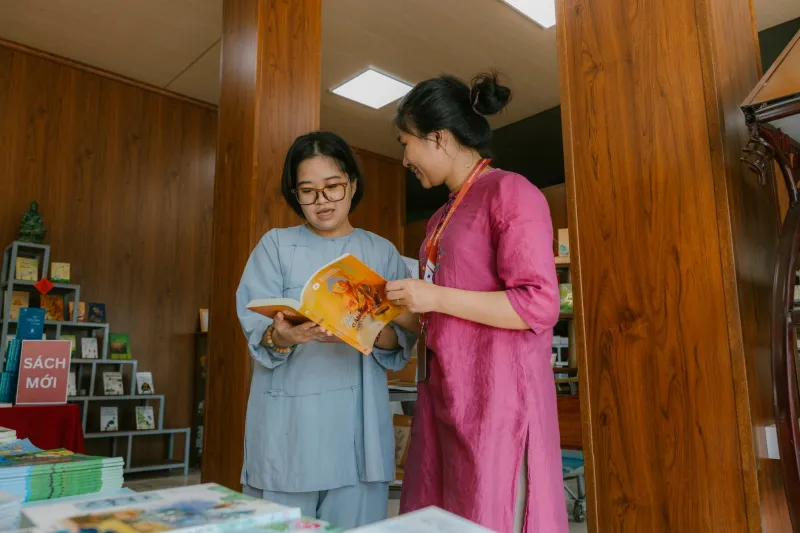
Walk into most chain bookstores in America and you'll find maybe a single shelf — if you're lucky — tucked somewhere between travel guides and self-help, labeled "Native American." Half the titles will be written by non-Native authors. A few will be decades out of date. And almost none of them will reflect the living, breathing, complicated, joyful, and sovereign reality of Indigenous communities in the 21st century.
That gap is exactly what a new generation of Native booksellers is refusing to accept.
Across the country, from the Pacific Northwest to the Great Plains to the urban neighborhoods of Minneapolis and Albuquerque, Native-owned and Native-centered independent bookstores are quietly opening their doors. And what they're building inside those doors goes well beyond retail.
A Shelf Is a Statement
For Deidra Sly, who opened her shop in Tulsa, Oklahoma, the decision to start stocking books was inseparable from her work as a language teacher in her Cherokee community. "I kept looking for picture books that used our language," she says. "Books that showed kids who looked like them, talked like them, lived like them. And I just couldn't find them anywhere easy. So eventually I thought — why don't I just be the place people can find them?"
What started as a small curated shelf in a community center has grown into a full storefront that now carries over 800 titles by Indigenous authors, illustrators, and storytellers. But the books are almost secondary to what else happens there. Language circles meet on Tuesday evenings. A rotating author reading series brings in Native writers from across the region. And every few months, Sly hosts a "publishing workshop" for community members who want to write — because, she says, getting the book written is only half the battle.
"The publishing industry doesn't really know what to do with us unless we're writing trauma," she says, laughing a little. "The moment you try to write something funny, or speculative, or just about regular Indigenous life that isn't centered on suffering, doors get harder to open."
Stocking the Shelves Is Its Own Political Act
One of the less-discussed challenges of running a Native-focused bookstore is the sheer difficulty of sourcing the inventory. Major distributors don't prioritize small Indigenous presses. A lot of the most important titles — the ones that communities actually want — come from publishers that mainstream wholesale networks have never heard of.
Native-owned presses like Birchbark Books' in-house publishing arm, Salish Kootenai College Press, and the work coming out of tribal colleges and universities often operate outside the standard ISBN and distribution systems that big-box retailers rely on. That means Native booksellers spend a lot of time doing what their corporate counterparts never have to: building direct relationships with authors, tribal education departments, and small presses one phone call at a time.
"I probably spend ten hours a week just tracking down books," says Marcus Runningwater, who runs a small shop outside of Rapid City, South Dakota. "But that's also kind of the point. Those relationships matter. When I call an author directly and say, 'Hey, can I stock your book,' that means something different than a purchase order from a warehouse."
That direct-relationship model has a side effect that's worth paying attention to: it keeps money circulating within Indigenous networks. Authors get a higher cut. Small presses stay viable. And the community sees itself reflected in a commercial space in a way that's genuinely rare.
The Bookstore as Cultural Infrastructure
There's a concept that keeps coming up when you talk to Native booksellers — the idea that a bookstore isn't just a store. It's infrastructure. The same way a community center or a language immersion school serves as a pillar of cultural continuity, a well-run Indigenous bookstore can anchor a neighborhood's sense of its own identity.
In Minneapolis, where a significant urban Native population has long fought for visibility and resources, a collective-run bookshop has become one of the go-to spaces for everything from after-school reading programs to healing circles to voter registration drives. "We call ourselves a bookstore because that's the easiest shorthand," one of the collective's founding members explains. "But really we're a community hub that happens to sell books. The books are how we start conversations."
That dual identity — commercial space and cultural sanctuary — creates its own set of tensions. Keeping the lights on means selling books, which means navigating the awkward reality of capitalism. But refusing to engage with the market altogether means losing the visibility and sustainability that a storefront provides.
Most Native booksellers seem to have made peace with that tension. They're pragmatic about it. "We're not anti-commerce," Sly says. "We're anti-extraction. There's a difference. We want this community to thrive economically. We just want the money to stay here and the stories to stay ours."
Launching Pads for Voices the Industry Ignores
Perhaps the most radical thing these bookstores are doing is functioning as on-ramps for Indigenous writers who can't get traction with mainstream publishers. Several of the shops now host what amount to informal literary incubators — spaces where aspiring authors can workshop manuscripts, connect with editors, and learn the practical mechanics of getting a book into the world.
The results are starting to show up on shelves. A handful of titles that got their first real audience through Native bookstore events have gone on to wider recognition, picked up by larger publishers or earning spots on regional bestseller lists. But more importantly, they've reached the readers who needed them most: Indigenous kids seeing themselves as protagonists for the first time, elders finding their own stories validated in print, young adults discovering that their experience of living between worlds is something worth writing about.
"When a kid picks up a book and the main character has a name like theirs, or lives somewhere like where they live, something shifts," Runningwater says. "That's not a small thing. That's everything."
What Comes Next
The movement is still young and, in many ways, fragile. Independent bookstores of any kind face brutal economics. Native-owned ones face those same pressures plus the added weight of operating in communities that have been systematically under-resourced for generations.
But there's something stubborn and alive in what these booksellers are building. They're not waiting for the publishing industry to come around. They're not holding their breath for a chain bookstore to finally get its "Native American" section right. They're building their own shelves, curating their own stories, and creating the spaces where Indigenous literary culture can do what it's always done — survive, adapt, and refuse to be quiet.
A bookstore, it turns out, can be one of the most quietly radical things a community builds. And right now, Native communities across America are building them one carefully chosen title at a time.