The Creator's Game Comes Home: Indigenous Athletes Are Restoring the Soul of Lacrosse
The Creator's Game Comes Home: Indigenous Athletes Are Restoring the Soul of Lacrosse
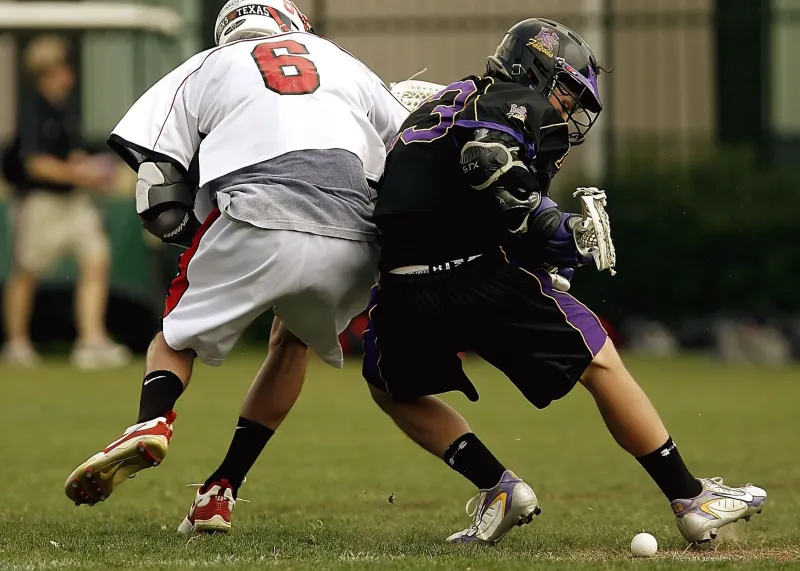
Somewhere along the way, lacrosse got a rebrand it never asked for. What started as a deeply ceremonial practice — played across vast stretches of North American land long before European contact — eventually got scooped up by prep schools, collegiate programs, and suburban sports leagues that dressed it in plaid and sold it back to the world as a symbol of a very particular kind of American privilege. The origin story got buried under turf fields and equipment sponsorships.
But that burial was never permanent. And the people who always knew the truth about this game are making sure everyone else starts learning it too.
Before the Whistle, There Was the Prayer
Among the Haudenosaunee — the people of the Longhouse, whose confederacy spans present-day New York and beyond — lacrosse has always been known as "the Creator's game." That's not a metaphor. Traditional oral histories describe the sport as a literal gift from the Creator, a medicine game played to restore balance when individuals or entire communities fell out of harmony. Games were sometimes organized specifically to heal the sick. Disputes between nations could be settled on the field rather than the battlefield. Players fasted, prayed, and underwent ceremonial preparation before ever picking up a stick.
The sticks themselves were sacred objects, crafted with intention and treated with reverence. The field had no fixed boundaries — games could stretch for miles and last for days. There were no referees in the Western sense. Elders guided the spirit of play. The goal was never simply to win. It was to give something back.
That version of lacrosse — raw, vast, spiritually alive — is what a growing number of Native communities across the United States are working to recover.
Bringing the Ceremony Back to the Game
In upstate New York, on Haudenosaunee territory, youth programs have been quietly doing this work for years. Coaches who grew up watching the sport get co-opted by outside institutions have made a deliberate choice: teach the kids the full story, not just the rules. That means opening practices with ceremony. It means talking about what the stick represents before you ever talk about a shooting technique. It means making sure a teenager from the reservation understands that when they step onto a field, they're participating in something that stretches back centuries.
Similar efforts are taking root in tribal communities from the Great Lakes to the Pacific Northwest. The Ojibwe, who have their own deep lacrosse traditions, have seen renewed interest from youth who feel alienated by the mainstream version of the sport but electrified by learning its Indigenous roots. Programs run through tribal colleges and community centers are weaving cultural education directly into athletic training — not as an add-on, but as the foundation.
Elders are central to this revival in a way that conventional sports programs simply don't allow for. In these spaces, the oldest voices in the room aren't sidelined. They're coaching. Not plays — spirit.
The Politics of a Stolen Sport
Reclamation doesn't happen in a vacuum. There's a harder conversation happening alongside the cultural revival, one that involves money, recognition, and institutional power.
For decades, major lacrosse governing bodies in the US operated as though the sport had no Indigenous history worth formally acknowledging. The Haudenosaunee Nationals — a team representing the Haudenosaunee Confederacy as a sovereign nation — have faced repeated bureaucratic battles just to compete in international tournaments. In 2010, the team was denied entry into the United Kingdom for the World Lacrosse Championship because the British government wouldn't recognize their Haudenosaunee passports. The symbolism was almost too on-the-nose: a nation's team, carrying their own sovereign documents, being turned away from a tournament in the sport their ancestors invented.
That incident lit a fire. Advocacy has grown louder and more organized since then. There are now formal pushes within the lacrosse world to require governing bodies to include Indigenous history in official educational materials, to create pathways for tribal teams to compete at elite levels, and to ensure that revenue generated by the sport's enormous collegiate and youth market finds some meaningful way back to the communities that gave it life in the first place.
These aren't fringe demands. They're increasingly being voiced by non-Native players and coaches who've done the reading and feel the weight of what they're participating in.
What the Players Say
Talk to young Native lacrosse players and you hear something that doesn't come up in ESPN highlight packages. They talk about the game the way other people talk about going to church — or more accurately, the way people talk about church when it actually means something to them rather than just being a Sunday obligation.
For many of these athletes, stepping onto the field with full knowledge of what the game represents changes everything about how they play. The pressure shifts. It's no longer about scholarship offers or stats. There's a sense of responsibility to something larger — to the ancestors who played this game through the night to heal a sick child, to the elders who kept the stories alive, to the younger kids watching from the sidelines who are still figuring out who they are.
Coaches working in these community programs describe watching players transform when that context lands. Kids who were disengaged become fierce. Not aggressive — fierce. There's a difference, and it shows up in how they carry themselves both on and off the field.
More Than Reclamation — It's a Reminder
What's happening with Indigenous lacrosse right now is part of a much broader pattern visible across Native communities in the US: the active, urgent work of recovering what was taken and reattaching it to living culture. Language revitalization, food sovereignty, land back — these movements all share the same heartbeat. The message is consistent: we didn't disappear, we adapted, and now we're bringing everything back on our own terms.
Lacrosse fits into that story in a uniquely visible way because the sport is so embedded in mainstream American culture. It's played in public. It's televised. There's a ready-made audience that already loves the game but has never been asked to reckon with its full history.
That's actually an opportunity. Every time a Native coach explains the Creator's game to a room full of kids who grew up watching it as just another sport, something shifts. Every time a tribal team takes the field with ceremony and prayer, they're teaching without lecturing.
The Creator's game was never really lost. It was just waiting for the world to quiet down enough to hear it again.