More Than a Game: How Native Youth Sports Programs Are Becoming Classrooms for Cultural Survival
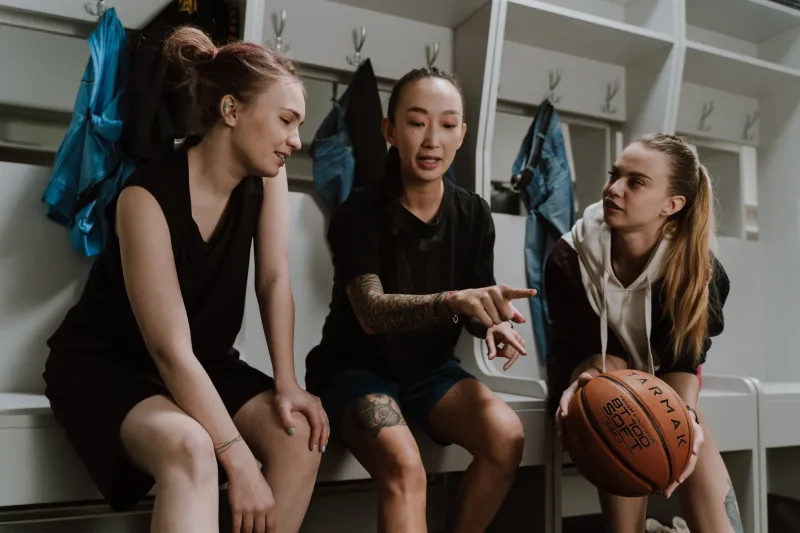
There's a moment that happens in a lot of gyms and on a lot of fields across Indian Country that you won't find in any coaching manual. Practice is winding down, the drills are done, and an elder pulls up a folding chair at half court. The kids gather around — still sweaty, still buzzing — and the stories begin.
That moment is intentional. And it's becoming a movement.
Across the United States, a growing number of Indigenous youth sports programs are doing something quietly radical: they're turning athletic spaces into living cultural classrooms. Basketball rosters are named after clan animals. Lacrosse teams open warmups with language greetings in Haudenosaunee or Lakota. Pre-game prep includes listening to oral histories, not just scouting reports. The coaches are collaborating with community elders, and the results are reaching far beyond wins and losses.
Why Sports? Why Now?
For a lot of Native communities, sports have always carried weight beyond competition. Basketball in particular has deep roots in reservation life — courts are community gathering points, tournament weekends are reunion weekends, and the game itself has been adopted and adapted into something distinctly Indigenous in character and spirit.
But the newer model being built in programs from the Navajo Nation to the urban Native communities of Minneapolis and Seattle is asking a bigger question: if kids are already showing up for sports, what else can we give them while we have their attention?
"We know young people are coming to practice," says one program director working with youth on the Pine Ridge Reservation in South Dakota. "The question we asked ourselves was, what are we doing with that time beyond conditioning and plays? Are we building whole people, or just athletes?"
The answer, increasingly, is that these programs are trying to build whole people — young Native men and women who understand their lineage, speak at least fragments of their ancestral language, and feel a grounded sense of who they are when the final buzzer sounds.
Stitching Story Into the Schedule
The mechanics of how this works vary by community, but the spirit is consistent. Programs are carving out dedicated time — sometimes fifteen minutes before practice, sometimes a longer session on the weekend — for cultural mentorship that runs parallel to athletic development.
In some programs in the Pacific Northwest, teams begin each week with a talking circle where an elder or cultural liaison shares a teaching from oral tradition. The teaching isn't abstract — it's tied directly to the values the coaching staff wants to see on the court. A story about patience and endurance maps onto defensive positioning. A teaching about collective responsibility mirrors what coaches preach about team play.
In New Mexico, one youth lacrosse program has taken the approach even further, integrating language lessons directly into drills. Positions are called out in the Native language. Play names are drawn from traditional vocabulary. Kids who might never sit through a formal language class find themselves absorbing vocabulary through muscle memory, through repetition, through the sheer joy of moving their bodies.
"It doesn't feel like school," one teenage player in the program explained. "It just feels like part of the game. But then I go home and I'm using words with my grandma that I never knew before."
That kind of cross-generational transfer — the accidental, embodied kind — is exactly what these programs are engineering.
Elders on the Sideline
One of the most striking features of this model is the deliberate inclusion of elders not just as ceremonial presences but as active contributors to the program's identity. In many communities, elders and coaches are co-designing the cultural curriculum together, identifying which stories and teachings are appropriate to share, and building trust with families who might otherwise be skeptical about how their traditions are being handled.
This collaboration isn't always easy. It requires coaches — many of whom are younger community members themselves — to approach elders with humility and patience. It requires elders to trust that their knowledge will be treated with respect in a space that is, at its surface, about athletic performance.
But where it works, it creates something powerful: a model of mentorship that mirrors older Indigenous educational traditions, where knowledge was transmitted through relationship and practice rather than through formal instruction.
"Our kids don't always have access to elders in their daily lives the way previous generations did," notes one program coordinator in the Twin Cities, where a significant urban Native population has built its own sports and cultural infrastructure. "Bringing elders into the sports space closes that gap. It makes the relationship feel natural rather than forced."
Identity as the Real Trophy
Research on Indigenous youth wellness has consistently pointed to cultural identity as one of the strongest protective factors against the mental health challenges that disproportionately affect Native communities — depression, anxiety, substance use, and the long-term effects of historical trauma. Programs that strengthen a young person's sense of belonging to something larger than themselves are, in a very real sense, doing prevention work.
Coaches in these programs talk about seeing the shift in their athletes. Kids who arrive disconnected, sometimes acting out, sometimes just checked out, begin to stand differently when they understand who they are. They carry themselves with a kind of quiet pride that doesn't need to announce itself.
"I've watched a kid go from barely making eye contact to leading a talking circle in front of thirty people," one coach shared. "That's not basketball doing that. That's knowing your story."
The trophy metaphor is worth sitting with. These programs are genuinely competitive — they want to win games, develop skills, and give kids pathways to higher-level play if that's what they want. But the coaches are clear-eyed about what they're really building. Championships are temporary. Identity is foundational.
A Model Worth Watching
What's emerging from Indian Country and urban Native communities alike is a blueprint that other communities — Indigenous and otherwise — would do well to study. The idea that sports programs can serve as vectors for cultural transmission isn't new in theory, but the intentionality with which Native coaches and elders are executing it right now is genuinely innovative.
Funding remains a challenge, as it always does for programs serving Native youth. Many of these efforts run on grants, volunteer labor, and the sheer determination of coaches who are often doing this work on top of day jobs. Sustainable support from tribal governments, foundations, and federal programs would go a long way toward scaling what's working.
But the model is proving itself. Kids are showing up. Elders are showing up. And somewhere between a layup drill and a story told in a folding chair at half court, something ancient is being kept alive.
That's not a small thing. In a country that spent over a century trying to erase Indigenous identity through every institution it could weaponize, a basketball court where a kid learns their clan name before running a fast break is an act of profound resistance.
And it looks a lot like joy.