Threaded With Rights: The Indigenous Designers Making Fashion Answer for Itself
Walk into Bethany Yellowtail's Los Angeles studio and you'll notice something missing: the vague, pan-Indian mashup of feathers and geometric prints that mainstream fashion has spent a century passing off as 'Native-inspired.' In its place? Specificity. A Bia O Maajii Giizhigat print rooted in Apsáalooke star knowledge. Ribbonwork techniques learned from relatives, not Pinterest boards.
That distinction — specific versus generic, sourced versus stolen — is the fault line where a new generation of Indigenous designers is redrawing the entire industry.
The Copycat Problem, Taken to Court
Ask any Native designer about appropriation and you'll get a story with a price tag. Urban Outfitters and the Navajo Nation spent years locked in litigation over the word 'Navajo' itself — a fight the Nation ultimately won. Nike's N7 line, for all its visibility, operates with actual tribal collaboration. The difference isn't aesthetics. It's consent, compensation, and credit.
Younger designers aren't waiting for the lawsuits to find them. Many now file trademarks early, document their designs like patents, and use social media to name-check brands that borrow without asking. 'We grew up watching our grandmothers' beadwork show up on fast-fashion racks at $19.99,' one designer told me. 'We're the first generation with both the receipts and the platform.'
Supply Chains That Pay It Forward
Here's where it gets radical: these designers aren't just changing what's on the runway — they're changing who profits from it.
Rather than sourcing through the usual textile brokers, many build hyper-local supply chains. Wool from tribal ranchers. Dyes made with plants gathered by aunties who know exactly when to harvest. Screen printing done by a cousin's shop on the rez, cutting and sewing handled by a cooperative of grandmothers who set their own rates.
The result is a business model where a dress sale ripples outward — into a family, a district, a nation. Economists call it 'circular.' Designers call it Tuesday.
Redefining 'Native-Inspired' — By Ending the Phrase
The most subversive thing happening in Indigenous fashion might be the death of the word 'inspired.' When a designer is a citizen of the nation whose motifs they're using, nothing is 'inspired.' Everything is inherited.
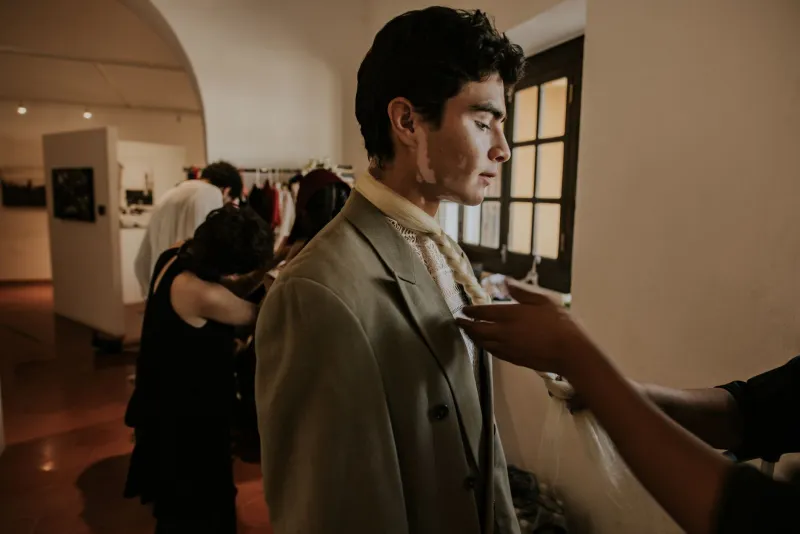
That shift shows up on runways from Santa Fe Indian Market to New York Fashion Week, where designers like Korina Emmerich and Jamie Okuma present work that refuses to be costume. Tailoring that references 19th-century trade-wool dresses. Beadwork applied with couture patience — Okuma's pieces can take hundreds of hours. These aren't looks. They're arguments.
And audiences are listening. Buyers at major retailers, once skittish about anything 'ethnic,' now come with contracts that include attribution clauses. The industry is learning that authenticity isn't a marketing angle you can license. It's a relationship you have to honor.
What Sovereignty Looks Like in a Lookbook
Sovereignty sounds like a legal term, and it is — but in fashion, it's something simpler and stranger: the right to define yourself in front of everyone.
For centuries, others dressed Native people in what suited the story they wanted to tell — the noble savage, the vanishing race, the generic 'tribal' print. Today's designers are telling their own stories, in their own fabrics, at their own prices, and daring the industry to keep up.
The next time a major label drops a 'boho' collection heavy on turquoise and fringe, check the credits. Increasingly, you'll find the real thing already out there — made by the people it belongs to, priced to sustain a community, and beautiful in a way no copy can fake.
The runway was never the destination. It's just where the world finally shows up to watch.