The Court Is Ours: How Native Basketball Tournaments Became the Heartbeat of Indigenous Community Life
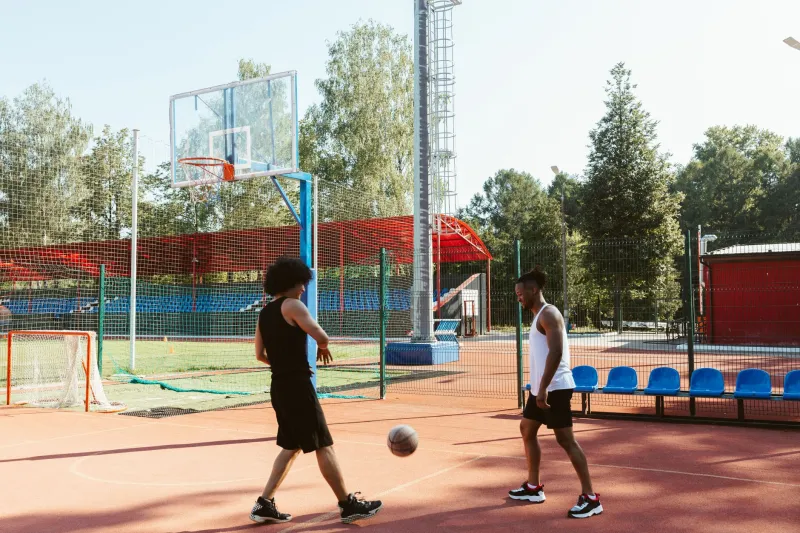
It's July in the high desert of northeastern Arizona, and the bleachers are packed before 8 a.m. Coolers are crammed under folding chairs. Kids chase each other between the legs of aunties who haven't seen each other since last summer. On the court, two teams from different chapters of the Navajo Nation are warming up, and the energy crackling through the air has very little to do with the final score.
This is the Navajo Nation summer basketball circuit — and if you've never heard of it, that's kind of the point. It was built by the community, for the community, and it has been quietly doing the work of cultural preservation, economic support, and collective healing for decades.
More Than a Trophy
Ask any organizer of a tribal basketball tournament why they keep showing up at 5 a.m. to set up folding tables and tape down court lines, and you'll get the same answer wrapped in different words: because it matters. Not in a vague, feel-good way. In a specific, tangible, people-showing-up-from-four-states kind of way.
Basketball took root in Native communities throughout the 20th century, often through federal boarding schools that introduced the sport as part of assimilation programs. The cruel irony is that Native communities took that tool and turned it into something entirely their own. What was once imposed became reclaimed — a space where Indigenous players could excel on their own terms, compete under their own flags, and hear their own languages called out from the sidelines.
Today, tribal tournaments range from informal weekend round-robins on reservation courts to large-scale, multi-day events that draw hundreds of teams and thousands of spectators. The Oneida Nation in Wisconsin has built a reputation for hosting tournaments that function almost like cultural festivals — complete with food vendors selling fry bread and wild rice dishes, craft tables, and elder recognition ceremonies woven into the schedule. Winning a championship bracket matters, sure. But so does the fact that a grandmother got to watch her grandson play while sitting next to cousins she hadn't seen in two years.
The Organizers Who Hold It Together
Behind every great tournament is a small army of volunteers who don't get nearly enough credit. These are the coaches who drive three hours to pick up a player who doesn't have a ride. The community liaisons who spend months securing gym time and sponsorships. The elders who show up not to play but to witness — and whose presence alone carries weight.
In urban Native communities, where Indigenous people live far from their home nations but still need spaces to maintain cultural connection, leagues have become especially vital. Cities like Albuquerque, Minneapolis, Phoenix, and Rapid City have developed robust Native basketball networks that serve as anchors for people navigating life between two worlds. These leagues are often the first place a newly relocated Native person walks into and feels recognized.
Coaches in these settings often describe themselves as more than sports instructors. They talk about the court as a place where young people learn accountability, where they process grief, where they find mentors who look like them and carry the same histories. "I'm not just teaching them to shoot a three," one organizer from the Albuquerque area told a local Native media outlet. "I'm teaching them who they are."
Fundraising, Food, and the Economics of Community
Let's talk money — because these tournaments don't run on goodwill alone, and the economic dimension of tribal basketball is often overlooked by outsiders.
Entry fees, concession sales, raffle tickets, and vendor booths generate real revenue that flows back into communities. Some tournaments use proceeds to fund youth programs, scholarship funds, or elders' assistance. Others support language revitalization initiatives or cultural camps. The Navajo Nation summer circuits, for example, have at various points channeled tournament income into community projects that have nothing to do with sports — which is exactly the point.
Local Native-owned businesses often get their biggest sales weekends of the year at these events. Food vendors who specialize in traditional or fusion Indigenous cuisine find audiences that are hungry in every sense of the word. Artists and craftspeople set up alongside the courts, connecting with buyers who understand and appreciate the cultural context of what they're selling. The tournament becomes a pop-up economy rooted in community trust.
Identity on the Court
There's a reason teams choose the names and colors they do. There's a reason players wear their nation's flag on their jerseys, or why certain games feel like they carry the weight of history. Basketball, in these spaces, is never just athletic competition. It's an assertion of presence.
For Native youth growing up in communities where they are often invisible in mainstream American culture — absent from textbooks, misrepresented in media, erased from the national conversation — stepping onto a court surrounded by their own people is quietly radical. They are seen. They are cheered for. They are part of something that belongs to them.
This is especially meaningful for players from smaller nations or communities that don't have the visibility of larger tribes. A tournament that draws teams from thirty different nations creates a kind of pan-Indigenous solidarity that doesn't erase difference but celebrates it. Players learn about each other's traditions, languages, and histories through the informal diplomacy of shared meals and post-game conversations.
Healing in Motion
It would be incomplete to talk about Native basketball without acknowledging what it exists alongside. Many of these communities carry deep wounds — the ongoing effects of colonization, land dispossession, underfunded healthcare, and the mental health crisis that has hit Indigenous youth particularly hard. Suicide rates in some Native communities remain among the highest in the nation.
In that context, a basketball tournament is not a distraction from serious issues. It is a response to them. Movement, competition, community, and belonging are forms of medicine. Coaches and organizers who work in this space often partner with wellness programs, mental health advocates, and cultural practitioners to ensure that tournaments are spaces of genuine support — not just sport.
Some tournaments have incorporated talking circles, land acknowledgments, or ceremonial openings that situate the games within a larger cultural framework. The court, in these moments, is understood as part of the land — a place where relationships are maintained and renewed.
Showing Up Every Year
What makes these tournaments endure isn't just tradition. It's the fact that they keep meeting people where they are. They grow and adapt. They add new divisions for women and girls. They welcome urban players back into community. They find ways to honor elders while making space for the next generation.
And every summer, when the brackets go up and the first whistle blows, something clicks into place. Families reunite. Rivalries reignite. Kids watch older players and imagine themselves in those shoes. Elders nod from the bleachers with a kind of quiet satisfaction that doesn't require explanation.
The court is theirs. It has always been theirs — even when it took a while to make it so. And as long as the community keeps showing up, it always will be.