Seeds of Resistance: The Indigenous Food Sovereignty Movement Growing Power One Harvest at a Time
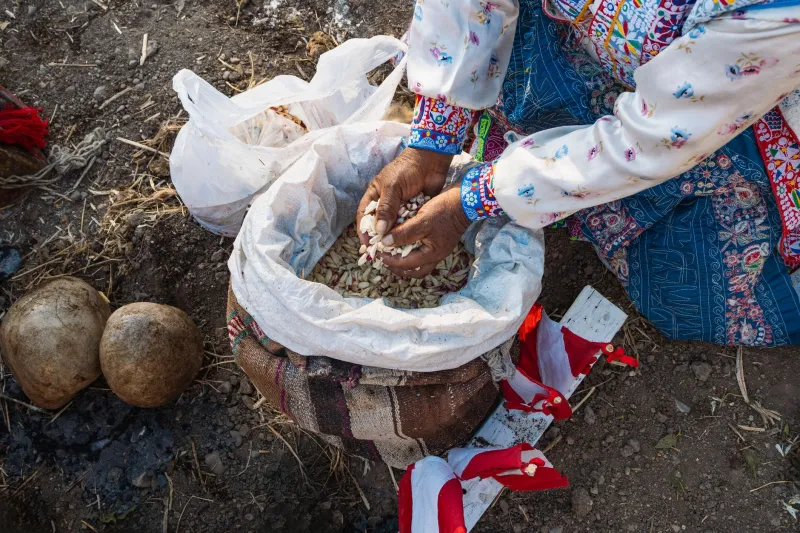
In a climate-controlled room in the Pueblo of Tesuque in New Mexico, there are seeds that haven't been planted in forty years. Blue corn varieties. Squash that colonization nearly erased. Bean cultivars that carry names in languages most Americans have never heard spoken.
They're not museum pieces. They're being grown out this season.
That's the thing about seeds. They're not passive. They don't wait quietly to be studied. They want to grow. And the people tending them understand that planting an ancestral seed isn't an act of nostalgia—it's an act of defiance.
The Colonial Roots of Food Insecurity
You can't talk honestly about Indigenous food sovereignty without talking about how Indigenous food systems were deliberately dismantled. This isn't ancient history. The forced relocation of tribal nations severed communities from the lands where their agricultural knowledge had developed over centuries. Federal food programs replaced traditional diets with commodity foods—lard, canned meat, white flour—that bore no relationship to Indigenous nutritional traditions and contributed directly to the chronic health crises that persist in many tribal communities today.
The diabetes epidemic on reservations isn't a mystery. It's a documented consequence of a food system imposed by force.
Understanding that history is what makes the current food sovereignty movement so much more than a gardening trend. Every seed saved, every ancestral crop replanted, every community garden that displaces a food desert is a direct response to a specific, intentional harm.
The Seed Keepers
At the center of this movement are the seed keepers—individuals and organizations who have been quietly maintaining Indigenous crop diversity through decades when the broader culture wasn't paying attention.
Native Seeds/SEARCH in Tucson, Arizona has been collecting and preserving seeds from the greater Southwest and northern Mexico since 1983, maintaining a living library of over 1,900 seed varieties connected to Indigenous and traditional farming communities. Their work isn't just conservation—they actively distribute seeds back to the communities they came from, prioritizing access for Native farmers and gardeners.
Further north, the Crow Creek Sioux Tribe in South Dakota has been reviving traditional corn varieties that were central to Plains agricultural traditions long before European contact. Their seed work is explicitly tied to cultural education—young tribal members learning to grow ancestral crops are also learning the stories, ceremonies, and ecological knowledge that accompany them.
That integration is intentional. A seed without its story is just a seed. A seed with its story is a portal.
Community Gardens as Political Infrastructure
Let's talk about what a community garden actually does in a tribal community dealing with food insecurity, limited grocery access, and the health consequences of decades of commodity food dependency.
It feeds people. That's not nothing—it's actually everything.
But it also does something harder to quantify. It creates a shared space where knowledge flows between generations. Where elders who know how to read soil and sky can teach teenagers who know how to use Instagram to document and share what they're learning. Where the act of growing food together becomes a rehearsal for the kind of collective decision-making that builds political power.
The Oneida Nation in Wisconsin has built one of the most comprehensive Indigenous food sovereignty programs in the country, integrating a working farm, a cannery, a café, and a seed library into a system that moves ancestral foods from field to table to community. It's not just food production—it's an economic ecosystem that keeps money and knowledge circulating within the community.
Their model has become a reference point for tribal food sovereignty initiatives across the country, and not by accident. They've been intentional about documentation and sharing, understanding that their success is most valuable if it can be replicated.
Health Sovereignty Is the Real Stakes
Indigenous food sovereignty advocates are clear-eyed about what's ultimately at stake. This isn't primarily about cultural aesthetics or agricultural heritage, though those things matter deeply. It's about health.
When communities control their food systems, they control their health outcomes in ways that no outside intervention—no federal nutrition program, no mobile health clinic, no well-meaning nonprofit—can replicate. The evidence is accumulating. Tribal communities that have invested in food sovereignty initiatives are seeing measurable improvements in diabetes rates, cardiovascular health, and youth wellness indicators.
The White Earth Land Recovery Project in Minnesota, founded by Winona LaDuke, has documented these connections over decades of work. Their wild rice restoration efforts aren't just ecological—wild rice is a central nutritional and cultural resource for Anishinaabe people, and its recovery has ripple effects across community health and identity.
When you can feed your community with food your ancestors grew, you're not just nourishing bodies. You're nourishing something harder to measure and easier to lose.
Growing the Next Generation of Leaders
Here's what doesn't show up in the grant reports: the kid who spent two summers in a community garden and is now running for tribal council. The teenager who learned to save seeds from her grandmother and is now teaching workshops at the tribal college. The young man who started growing traditional corn and ended up becoming the person his community calls when they need someone who understands both the land and the law.
Food sovereignty projects are leadership incubators. They create the conditions where young people develop competence, confidence, and community rootedness simultaneously. That combination produces leaders who are genuinely accountable to their communities—because they grew up in them, work in them, and are fed by them.
In a political moment when Indigenous communities are fighting for sovereignty on multiple fronts simultaneously, that pipeline of locally rooted leadership isn't a nice-to-have. It's infrastructure.
The Ground Is the Archive
There's a phrase that comes up repeatedly in conversations with Indigenous food sovereignty advocates: the land remembers.
It's not just poetic. It's agricultural reality. Soil that has been cultivated with traditional methods for generations holds a kind of knowledge—in its microbiology, its drainage patterns, its relationship to native plants—that can be recovered when the right seeds are returned to it.
The people doing this work understand that they're not starting from scratch. They're continuing something. The seeds in that room in Tesuque have been waiting, not just to be planted, but to be remembered.
And with every harvest, they're a little harder to forget.