Voices That Outlast Walls: Indigenous Oral Historians Are Building Archives No University Could Ever Hold
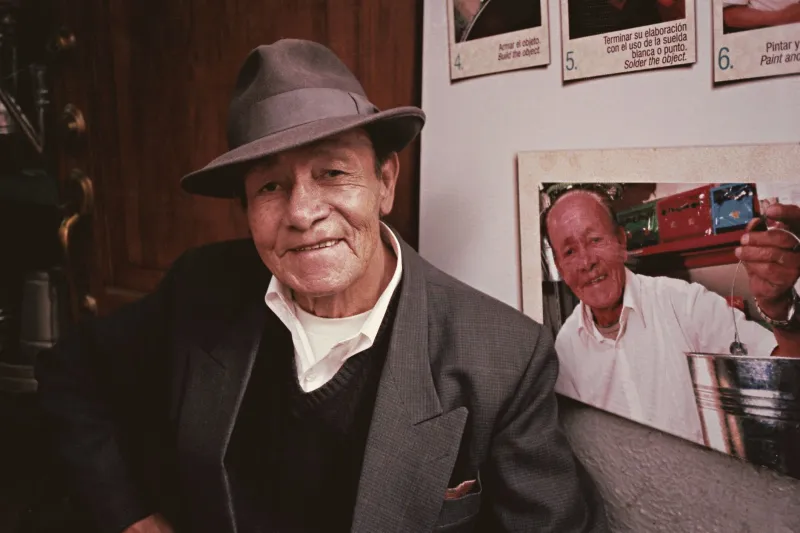
There's a recording studio in a converted community center on the Flathead Reservation in Montana. No fancy acoustic panels, no mixing boards worth six figures. Just a decent microphone, a laptop, and an elder who has been waiting a long time to tell his family's story without someone else deciding what parts matter.
That's the thing about community-led oral history projects. They don't ask you to trim the edges.
For generations, Indigenous knowledge has been filtered through institutions that weren't built for it—universities that catalogued stories as data points, museums that locked recordings behind access requests, academic journals that translated living memory into footnotes. The result was an archive that technically existed but was practically unreachable for the very communities it came from.
That's changing. Quietly, decisively, and on Indigenous terms.
Who Gets to Decide What's Worth Saving?
The question at the heart of these projects isn't really about technology or methodology. It's about authority. Who decides which stories get preserved? Who controls how they're accessed? Who profits—financially and culturally—from the knowledge inside them?
For most of American history, those answers pointed away from Indigenous communities. Anthropologists arrived with notebooks. Linguists arrived with recording equipment. They left with something irreplaceable, and communities were left with the promise that their heritage was being "protected."
Protected, maybe. But not returned.
Community-led oral history initiatives are built on a different premise entirely: that the people who carry these stories are also the best equipped to preserve and share them. No outside validation required.
Projects like the Myaamia Center's language and oral history work in Indiana, or the Cherokee Nation's ongoing digital documentation efforts in Oklahoma, have demonstrated that tribally controlled archives aren't just philosophically preferable—they're functionally superior. Elders speak more freely. Details don't get lost in translation. And crucially, the community retains ownership over what gets shared publicly and what stays protected.
The Tech Is Simpler Than You Think
One of the persistent myths about building a lasting archive is that it requires institutional infrastructure. Servers, librarians, climate-controlled rooms. The reality is that a determined community with modest resources and the right partnerships can build something genuinely durable.
Many of these grassroots projects are using a combination of cloud storage, locally hosted hard drives, and printed physical backups—redundancy built in from the start, because these communities understand better than most what happens when a single institution fails or burns down.
Some are partnering with organizations like the First Voices platform, which was developed specifically to support Indigenous language and cultural documentation. Others have worked with tribal colleges to train community members in archival best practices, creating a pipeline of locally skilled archivists who aren't going anywhere after the grant runs out.
That last part matters more than people realize. Academic projects tend to arrive, document, and depart. Community archivists stay. They attend the funerals. They know which elder is the right person to verify a genealogy. They understand the protocols around what can be shared during certain seasons or ceremonies. That kind of contextual knowledge doesn't fit in a metadata field.
Knowledge Keeping as a Career
There's an economic dimension to this work that doesn't get nearly enough attention. When a tribe builds its own archive infrastructure, it creates jobs—real, skilled, community-rooted jobs. Archivists, oral historians, audio and video technicians, digital preservation specialists, curriculum developers who can translate archived material into educational content for tribal schools.
The Chickasaw Nation in Oklahoma has been particularly intentional about this, investing in cultural documentation as part of a broader strategy for community self-sufficiency. Their archives don't just preserve the past—they fuel a cultural economy that employs tribal citizens and keeps knowledge circulating within the community rather than sitting inert in an off-site repository.
For younger tribal members, these projects offer something that's genuinely hard to find: a career path that doesn't require leaving home or leaving culture behind. The archivist who grew up hearing the stories she's now recording brings something to that work that no outside hire ever could.
Trust Is the Infrastructure
Ask anyone running one of these projects what their biggest asset is, and they'll give you the same answer: trust.
Elders who wouldn't speak to a university researcher will sit down with a community member they've known for thirty years. Families who've been reluctant to share genealogical records will contribute them to a tribal archive they know they can hold accountable. Young people who felt disconnected from their heritage find themselves drawn into the work once it's happening in their own language, in their own community, without the feeling that something is being extracted.
That trust is built slowly and protected carefully. Most of these projects have clear governance structures—community boards, elder councils, protocols for sensitive material—that make explicit what academic institutions often leave vague. Who can access what. Under what conditions. For what purposes.
It's not just ethical. It's practical. An archive that the community trusts is an archive that the community keeps contributing to.
What Gets Lost When Institutions Lead
It's worth being honest about what happened when outside institutions led this work. Stories were decontextualized. Sacred knowledge was published without consent. Recordings made in the early twentieth century ended up in university libraries where tribal members had to submit formal requests and prove their identity to hear their own grandparents' voices.
That history isn't ancient. Some of those barriers still exist today. And they're part of why community-led projects carry such urgency—not just as a better way of doing things, but as a corrective to real, documented harm.
The good news is that the momentum is undeniable. From the Pacific Northwest to the Gulf Coast, tribal communities are building archives that will outlast any single institution, any political administration, any funding cycle. They're doing it with a clarity of purpose that no grant application could fully capture.
The stories were always there. Now, finally, the people who own them are the ones deciding how they'll be heard.