Grandmothers at the Front of the Room: Why America's Most Powerful Teachers Never Got a Degree
There's a particular kind of authority that doesn't come from a diploma. You can't earn it in four years, and no accreditation board can grant it. It lives in the hands of a woman who has spent eight decades watching seasons turn, watching children grow into elders, watching her community survive things that would have broken most institutions twice over.
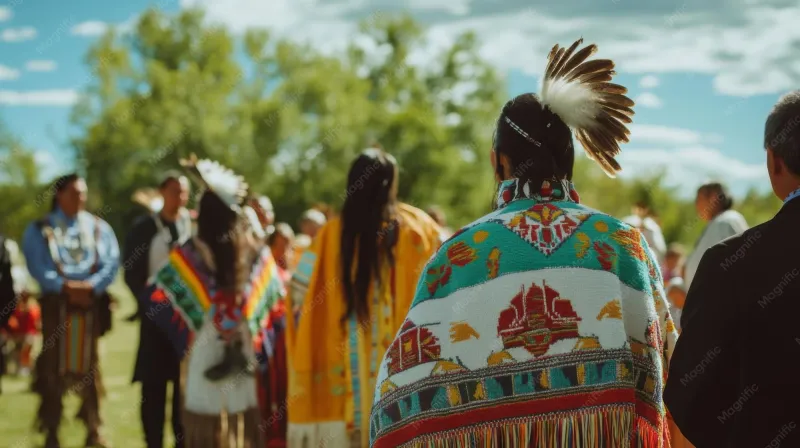
Across the United States right now, something remarkable is happening quietly in classrooms, corporate conference rooms, and university seminar halls: Indigenous grandmothers are being asked to teach. And the people doing the asking aren't just community members who already know better. They're school principals in Minnesota. They're HR directors at tech firms in Seattle. They're graduate students at Ivy League universities who've read every theory on the syllabus and still feel like something essential is missing.
They're right. Something is.
What the Textbooks Left Out
For generations, Western educational frameworks have treated knowledge as a product — something you package, test, and certify. Indigenous epistemologies have never worked that way. Knowledge, in most Native traditions, is relational. It moves between people. It's held in stories, in seasons, in the act of sitting together and paying attention.
When grandmothers from the Ojibwe, Lakota, Diné, or Cherokee nations walk into a room and begin to speak, they're not delivering a lecture. They're opening a relationship. That distinction sounds soft until you watch a room full of burned-out executives actually exhale for the first time in years.
"She didn't give us a framework," said one participant in a leadership retreat held on Haudenosaunee territory in upstate New York. "She gave us a story. And somehow the story did more than the framework ever did."
This is the invisible curriculum — the body of knowledge that has never been written into a standard, never been broken into learning objectives, and yet has sustained communities through displacement, legislation designed to erase them, and every variety of cultural assault the last five centuries could throw at them.
From Reservation to Resume: The Growing Demand
The movement isn't accidental. Organizations like the Grandmothers Counsel the World collective and tribal education departments in states from Oklahoma to Montana have been building bridges between elder knowledge-keepers and outside institutions for years. What's changed recently is the urgency on the other side.
Schools dealing with student mental health crises are turning to elders who have frameworks for collective healing that predate cognitive behavioral therapy by centuries. Conflict resolution programs in cities like Chicago and Albuquerque are incorporating circle practices — a restorative justice approach rooted in Indigenous tradition — because the data shows they work better than punitive models. Corporate diversity initiatives, often hollow and performative, are being replaced in some forward-thinking companies with genuine cultural immersion led by elder practitioners.
Dr. Winona LaDuke, scholar, activist, and member of the Ojibwe nation, has long argued that the West's crisis of meaning is, at its core, a crisis of disconnection — from land, from community, from the kind of long-view thinking that grandmothers carry in their bones. "Our elders aren't being charitable when they share this knowledge," she's noted in various contexts. "They're being strategic. Because a world that doesn't learn from this is a world that keeps making the same mistakes."
What These Classrooms Actually Look Like
Forget the standard setup. No projector, no slides, no "learning outcomes" posted on the wall. When elder Rose Bibby of the Anishinaabe nation visits schools in the Great Lakes region, she often starts by asking students to sit in a circle. Then she asks them to be quiet. Not for a moment — for long enough that it becomes uncomfortable.
"Discomfort is where learning starts," she says. "Comfort is where you already know everything."
From there, she might tell a story about her grandmother's grandmother. She might pass around a piece of birchbark and ask students to describe what they feel. She might ask them to name something they're grateful for before she'll say another word. By the end of an hour, teachers report that students who haven't spoken in class for months are talking. Not performing. Talking.
In university settings, the dynamic shifts slightly but the core stays the same. Indigenous grandmothers invited as guest lecturers at institutions like the University of New Mexico and the University of Minnesota aren't slotted into the "diversity speaker" box — at least not when it's done right. They're given full sessions, sometimes full courses, where their knowledge systems are treated as primary, not supplementary.
The Tension Nobody Wants to Talk About
Here's the honest part: not everyone in Indigenous communities is celebrating this trend. There are legitimate concerns about extraction — about institutions taking what they need from elder wisdom and giving nothing sustainable back. There are questions about compensation, about intellectual property, about whether a grandmother's teachings become someone else's "methodology" the moment a university publishes a paper about them.
These aren't paranoid worries. They're historically grounded ones. The appropriation of Indigenous knowledge has a long and ugly track record in American academia. So the communities that are doing this well are doing it with clear agreements: elders set the terms, communities retain ownership of their practices, and institutions are required to invest in ongoing partnerships rather than one-time engagements.
"We're not a resource to be mined," said one elder educator from the Pueblo communities of New Mexico. "We're a relationship to be honored. There's a difference."
What This Means for the Rest of Us
If you're not Indigenous, the question isn't how to extract this wisdom for yourself. The question is what you're willing to dismantle in order to make room for it. That means funding Native education programs without attaching strings. It means redesigning spaces — literally and figuratively — to center different ways of knowing. It means accepting that a woman who has never published a peer-reviewed article might understand leadership better than any business school dean.
America has a habit of recognizing the value of things only after it's spent generations trying to destroy them. The knowledge that Indigenous grandmothers carry survived that destruction. It's still here. The least we can do is show up ready to listen — and actually change something because of what we hear.